




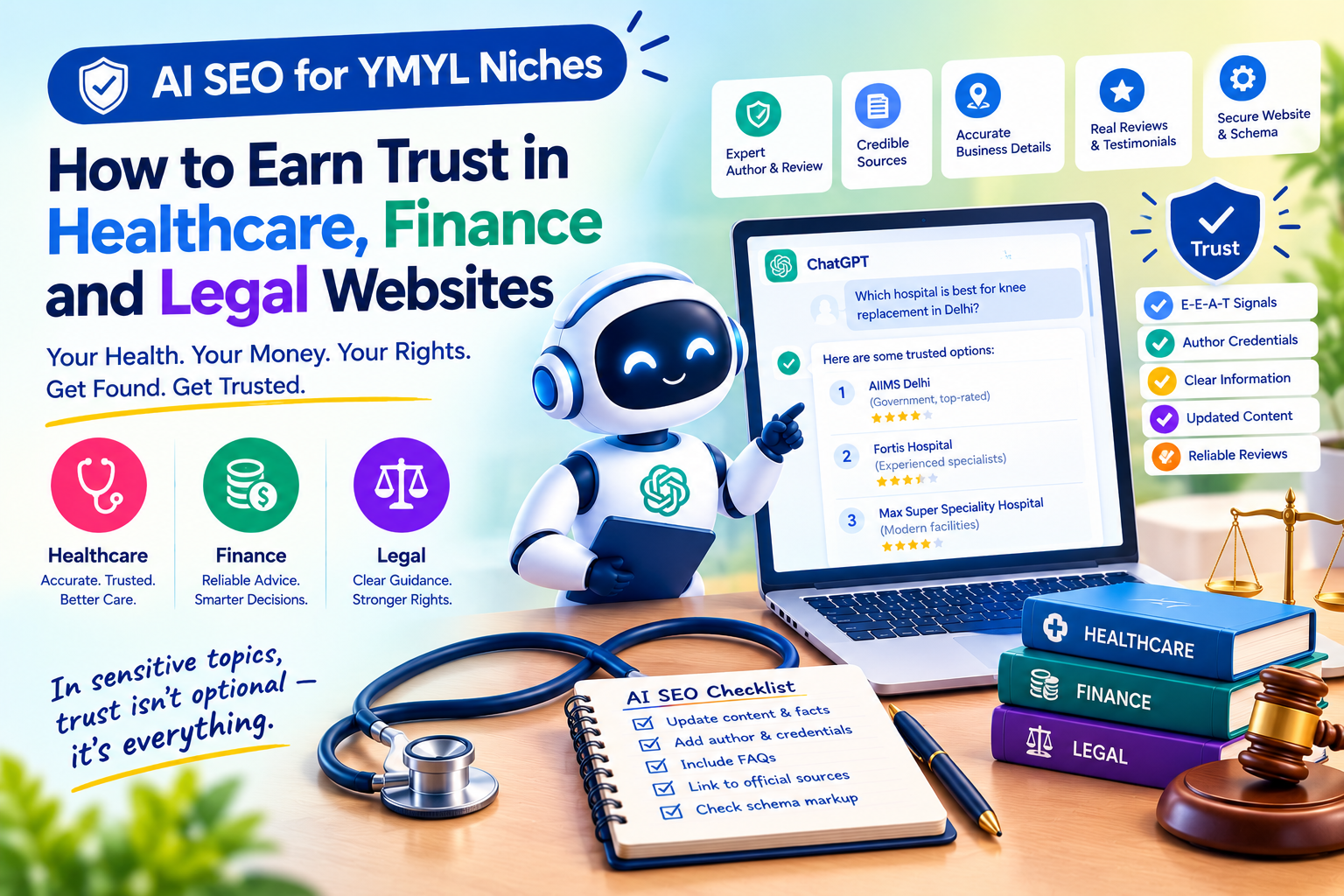
When someone asks an AI assistant about a medical symptom, a loan or a legal right, the stakes are higher than a question about sneakers. A wrong answer can affect health, savings or safety. That’s why AI tools tend to be more careful about which sources they rely on in these areas, often called YMYL, or “Your Money or Your Life,” topics.
If your business is a clinic, financial advisory, insurance provider or law firm, AI SEO works a little differently for you. Here are the questions we hear most.
Why is AI SEO harder in healthcare, finance and legal niches?
Because the bar for trust is higher. AI tools and search engines look for clear signs that a real, qualified person stands behind the information. Anonymous articles, exaggerated claims and thin advice are easy for them to skip.
The upside is that this raises the barrier for lazy competitors too. If you invest in genuine expertise and clarity, you can stand out in a way that generic content farms simply can’t match.
What signals build trust with AI tools in these niches?
Think of trust as a collection of small, visible proofs:
- Named authors with credentials. A doctor, chartered accountant or advocate attached to the content, with a short professional bio.
- Expert review. A line such as “Reviewed by [name, qualification]” on important pages.
- Clear sourcing. Links to official bodies, guidelines or published research.
- Transparent business details. Real address, licence or registration numbers where applicable, and easy-to-find contact information.
- Honest limits. Statements that make clear when someone should consult a professional.
These signals help real readers decide whether to trust you, and they give AI systems the same confidence.
How should I write content that AI can safely quote?
Keep it accurate, specific and balanced. Start each section with a direct answer, then explain the nuance. For example, instead of promising “guaranteed results,” explain what typically happens, what varies from person to person and when professional advice is needed.
Use plain language. If you must use technical terms, explain them briefly. AI tools favour content that a general reader can understand, because that is the kind of explanation they want to relay.
Avoid claims you can’t back up. Overpromising doesn’t just risk compliance trouble. It also weakens your credibility.
Do FAQs and AEO matter here?
Very much. People ask AI very specific, practical questions in these fields: “What documents do I need to apply for a home loan?” or “How long does recovery usually take after this procedure?” A clear FAQ section with careful, factual answers gives AI a reliable source to draw from.
Add FAQ schema so machines can read the answers cleanly. And keep each answer short and direct, with a pointer to a consultation for personal situations. That balance of helpfulness and caution is exactly what AI systems appear to prefer.
Can I use AI-written content in sensitive niches?
Only with strong human oversight. AI can help you outline, simplify language or spot missing questions. But every medical, financial or legal statement must be checked by a qualified person before publishing.
Unreviewed AI text can contain outdated rules, mistaken details or confident-sounding errors. In YMYL niches, those mistakes carry real consequences. At Sarkar SEO, we treat expert review as a non-negotiable step whenever a client works in a regulated or sensitive field.
How important are reviews and reputation?
Extremely. AI tools learn from what others say about you. Patient reviews, client testimonials, professional directory listings, association memberships and press features all feed that picture.
Build your reputation in the places that matter for your field:
- Respected professional directories and associations.
- Credible local and industry publications.
- Review platforms relevant to your sector.
- Speaking, interviews and expert commentary.
Always follow the rules of your profession when collecting or displaying reviews. Some fields restrict how testimonials can be used, so check local regulations first.
What technical details should I get right?
The basics matter even more when trust is on the line:
- Secure site (HTTPS) and a clean, professional design.
- Organization and local business schema with accurate details.
- Consistent information across your website, Google Business Profile and directories.
- Up-to-date pages, with visible review dates on sensitive topics.
- Clear privacy and disclaimer pages.
Sarkar SEO often finds that outdated information, such as old fees, closed branches or expired policies, is one of the quickest ways a sensitive-niche brand loses AI confidence.
What mistakes should I avoid?
- Publishing anonymous content with no author or expert behind it.
- Making guarantees about health outcomes, returns or legal results.
- Copying generic text from other sites.
- Letting pages go stale while rules and guidelines change.
- Ignoring compliance requirements in your region or profession.
How can I start this month?
Pick your five most important pages. Add a named, credentialed author or reviewer, update every fact, link to official sources and add a short FAQ with careful answers. Then ask ChatGPT, Gemini and Perplexity a handful of questions your clients would ask, and note whether your brand appears and how it’s described. Repeat monthly.
If you’d like a specialist team to build this into a complete plan, Sarkar SEO can help you balance visibility with the care your field demands.
