




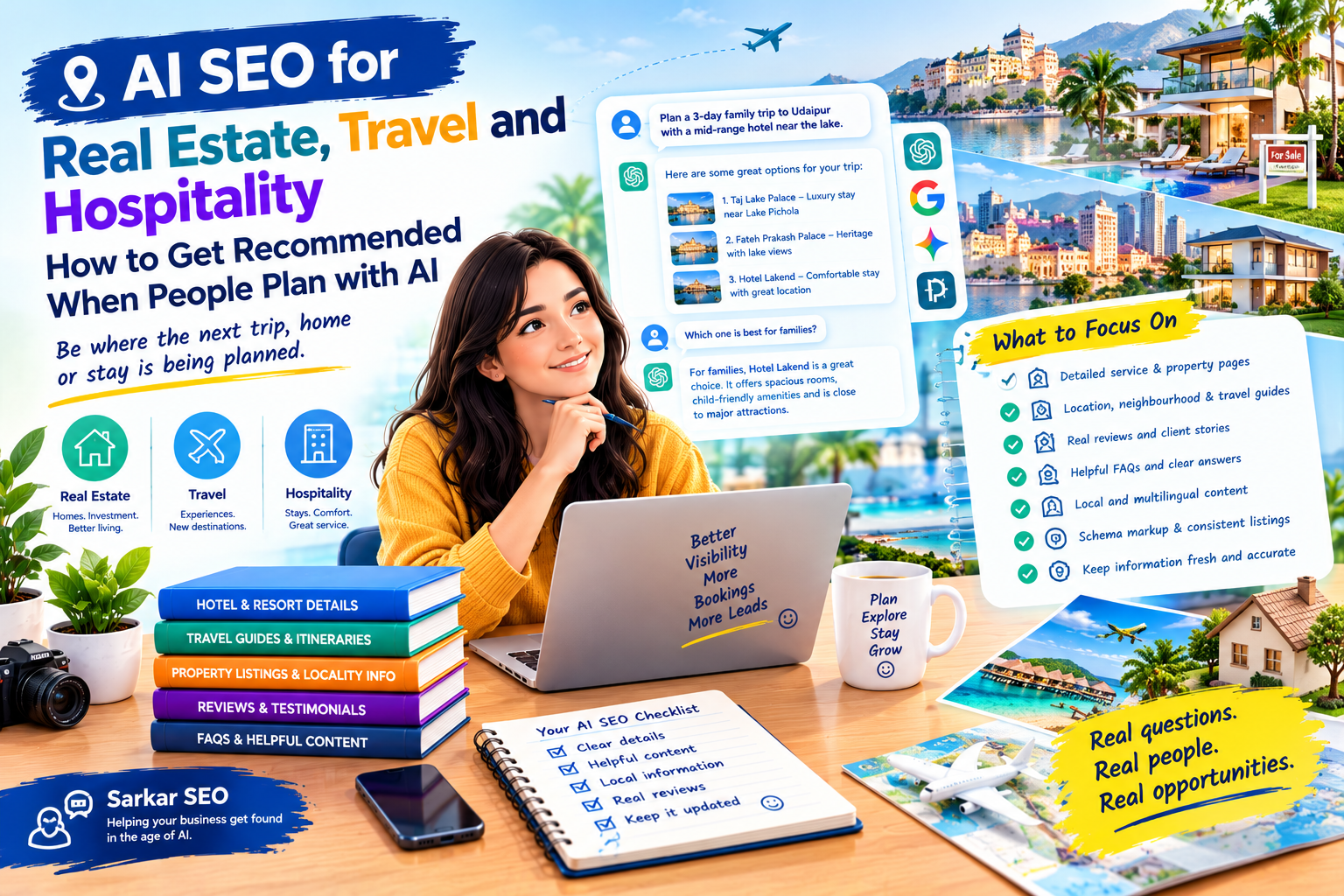
Planning used to mean browsing dozens of listings and review sites. Now a traveller types, “Plan a three-day family trip to Udaipur with a mid-range hotel near the lake,” and gets an itinerary with named places to stay. A home buyer asks, “Which areas in Jaipur are good for first-time buyers with a moderate budget?” and receives a shortlist of neighbourhoods and builders.
For property developers, agents, hotels and travel companies, these answers are becoming a new source of enquiries. Here are the questions we hear most about AI SEO in these industries.
Why do these industries need a different AI SEO approach?
Because the decisions are big, emotional and research-heavy. People spend weeks comparing options, and they ask AI detailed, personal questions that include budget, family needs, timing and preferences.
Generic content doesn’t survive in that environment. AI tools favour businesses that describe themselves with enough specific detail to match a particular traveller or buyer. The more precisely you explain who you suit, the easier it is for AI to recommend you to the right person.
What details should a hotel or travel business publish?
Think about the questions guests actually ask before booking:
- Distance to key attractions, the airport and the railway station.
- Room types, sizes, amenities and what’s included in the price.
- Family, couple, business or group suitability.
- Food options, dietary choices and policies for children or pets.
- Cancellation rules, check-in times and accessibility.
- Seasonal notes, such as best months to visit and peak-crowd periods.
Publish these in clear text on your site, not only inside images or PDFs. An AI can only repeat what it can read. Sarkar SEO often finds that hospitality sites hide their most useful details in sliders and brochures, which makes them invisible to AI tools.
What should real estate businesses publish?
Buyers ask practical, comparison-style questions, so build pages that answer them honestly:
- Project pages with location, configuration, sizes, amenities, possession status and approvals.
- Locality guides covering schools, hospitals, commute times, connectivity and lifestyle.
- Buying guides explaining processes such as documentation, loan basics and registration steps.
- Price context, explaining what influences pricing without making unsupported promises.
- FAQs about timelines, maintenance, resale and legal checks.
Always show regulatory and registration details where required, and keep information current. Outdated availability or prices damage trust quickly.
How do reviews and ratings affect AI recommendations?
In travel and hospitality especially, reviews are central. AI tools learn from what guests say across Google, travel platforms and social channels. Detailed reviews that mention cleanliness, staff, location, food and value for money give AI rich material to describe you.
Encourage guests to leave specific feedback, respond to every review politely and handle complaints transparently. For real estate, client testimonials, site-visit feedback and verified project updates play a similar role. Never fake or buy reviews. It violates platform rules and can backfire badly.
How important is local and neighbourhood content?
It’s one of your biggest opportunities. AI answers in these industries are deeply location-based. Create genuinely useful guides around your area: what to see, where to eat, how to get around, and what to expect by season.
For example, a hotel might publish “How to spend one day in the old city” with a realistic route, timings and tips. A real estate firm might publish “Living in [locality]: what residents say about daily life.” These pages show first-hand knowledge, which generic travel blogs rarely match.
Which technical elements help?
A few essentials make a real difference:
- Schema markup for hotels, local businesses, events, FAQs and reviews, where applicable.
- Accurate Google Business Profile with current photos, hours, categories and contact details.
- Consistent listings across booking platforms, directories and your own site.
- Fast, mobile-friendly pages, since most planning and last-minute checks happen on phones.
- Clear crawl access, so search and AI bots can read your pages.
Inconsistent information, such as different room counts, outdated prices or conflicting addresses, is a common reason AI hesitates to recommend a business.
What about Hindi and multilingual queries?
They matter a great deal in India. Domestic travellers and home buyers often ask in Hindi, Hinglish or regional languages, such as “Jaipur mein family ke liye achha budget hotel kaun sa hai?” If your content exists only in formal English, you may miss these conversations.
Add natural Hindi or Hinglish phrasing to FAQs and key pages where it suits your audience, then test how AI tools respond in each language. Sarkar SEO builds this multilingual testing into plans for tourism and property clients because language habits vary widely by region.
How can I check whether AI recommends my business?
Run a monthly test:
- Write 20 to 30 realistic questions, mixing budget, location, purpose and traveller or buyer type.
- Ask them in ChatGPT, Gemini and Perplexity.
- Record which businesses are named, how they’re described and which sources are cited.
- Compare results month to month and fix the weakest pages first.
Remember that answers change between runs, so repeat each question and look at the trend.
What mistakes should I avoid?
- Hiding key details in images or PDFs.
- Using vague marketing language instead of facts.
- Letting prices, availability or offers go stale.
- Ignoring negative reviews.
- Copying descriptions from booking platforms or builder brochures.
Where should I begin?
Start with your three most important pages: a flagship property or hotel page, a locality or destination guide and a detailed FAQ. Make each one specific, current and easy to read. Ask recent guests or clients for detailed reviews, align your listings, then test your question list to set a baseline. If you’d like expert help turning this into a full plan, Sarkar SEO can audit your current AI visibility and map the next steps.
