




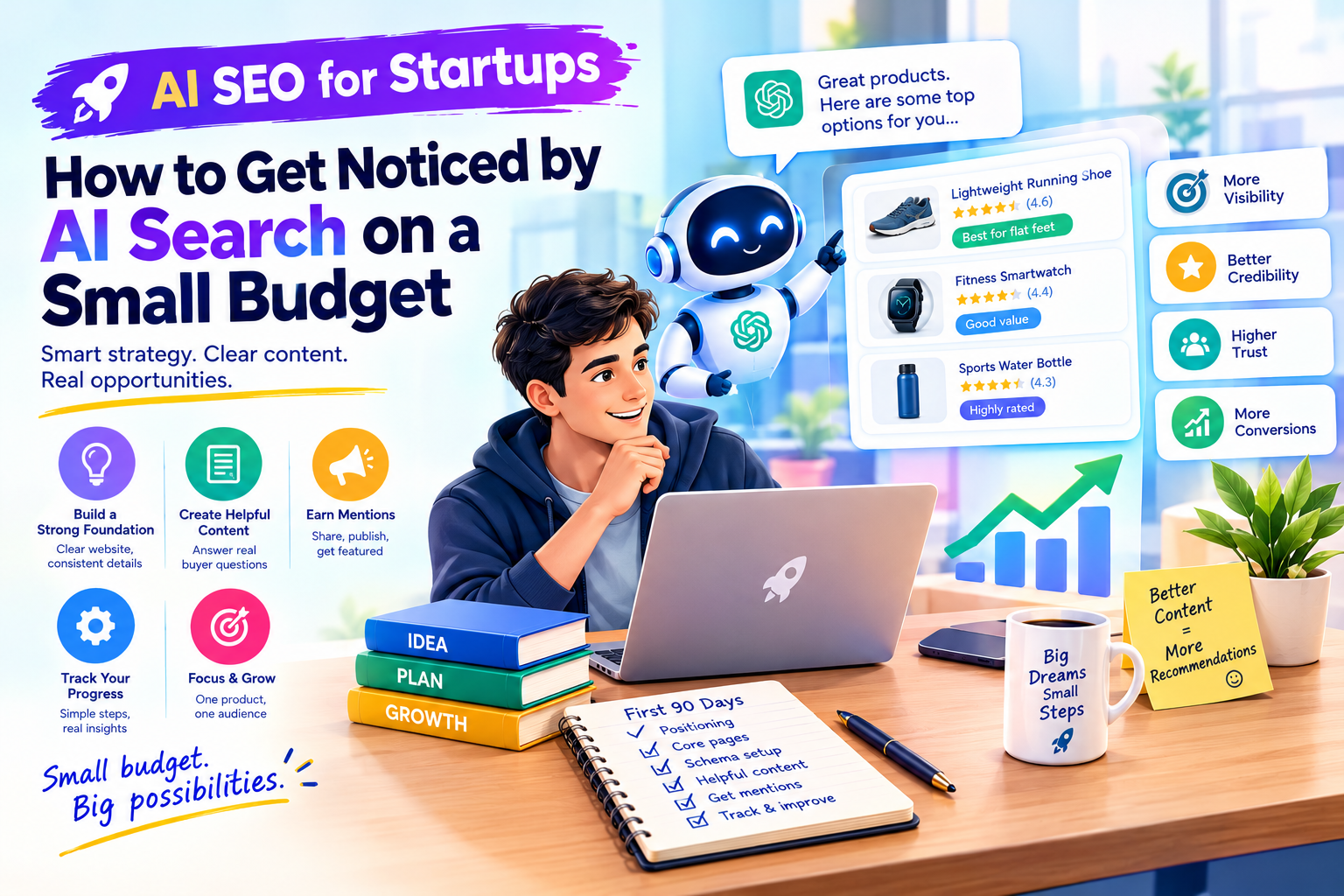
If you run a startup, you probably can’t outspend the big players. You don’t have a huge content team, a PR agency or a six-figure marketing budget. But here is something encouraging: AI search doesn’t only reward the biggest brand. It rewards the clearest, most useful and most trustworthy answer.
That gives small companies a real chance. Here are the questions founders ask us most about AI SEO when money and time are tight.
Can a new startup really show up in AI answers?
Yes, though it takes patience. AI tools tend to mention brands they can understand and verify. A new company starts with less history, so the job is to build that understanding quickly: a clear website, consistent details and a few credible mentions.
You may not appear for broad questions like “best software in the world.” But you can win narrow, specific ones, such as “invoicing tool for freelance designers in India.” Narrow questions are where small brands usually break through first.
Where should I spend my first month?
Spend it on foundations, not tactics. A simple order of priority works well:
- Define who you serve. Write one clear sentence: “We help [type of customer] do [specific thing].”
- Fix your core pages. Homepage, about page, and one page per product or service, each stating plainly what you do.
- Make your details consistent. Same name, description and contact information on your website, social profiles and directories.
- Add basic schema. Organization and FAQ markup help machines read your pages.
- Check crawl access. Make sure you haven’t accidentally blocked search or AI crawlers.
These steps cost little more than time, and they underpin everything else.
What type of content should a startup publish first?
Start with the questions your buyers ask before they purchase. Look at your sales calls, support emails and social comments. Turn the ten most common questions into clear, helpful pages.
Good starting points include:
- “What is [your category] and who needs it?”
- Comparison pages that fairly explain how you differ from alternatives.
- Pricing and “how it works” pages, since AI tools like concrete details.
- Use-case pages for each type of customer.
Quality beats quantity. Ten excellent pages will do more for you than fifty thin ones. Sarkar SEO usually advises early-stage companies to build a small, strong content core before expanding.
How can a startup earn mentions without a PR budget?
You don’t need a big agency to be mentioned in credible places. Try these low-cost routes:
- Founder-led expertise. Share genuine insights on LinkedIn, in industry communities and in relevant forums, without spamming.
- Guest contributions. Offer useful articles or quotes to niche publications in your field.
- Directories and listings. Join respected software, startup or industry directories relevant to your category.
- Customer stories. A happy customer’s detailed review or case study carries real weight.
- Original insights. Even a small survey or a simple analysis from your own data can earn attention.
Remember that AI tools learn from the wider web. A handful of honest, relevant mentions across trusted places often beats many low-quality links.
Do I need expensive tools to track AI visibility?
Not at the start. A spreadsheet and thirty minutes a month are enough:
- Write 15 to 20 questions your customers might ask.
- Run them in ChatGPT, Gemini and Perplexity.
- Record whether you’re mentioned, who else appears and how you’re described.
- Repeat monthly and compare.
Paid tools can help later, once you know what to measure. Sarkar SEO often starts new clients with this same lightweight method, so decisions are based on real answers instead of assumptions.
Should I hire an agency or do it myself?
It depends on your stage. If you have time and some marketing skill, handle the basics yourself: clear pages, consistent details and a monthly check. Bring in help when you hit a limit, such as technical fixes, large-scale content or outreach you can’t do alone.
If you do hire, ask for clear deliverables, transparent reporting and honest expectations. Be careful with anyone promising guaranteed AI rankings, because no one controls what an AI says. A good partner explains the plan, shows evidence and respects your budget.
What should a startup avoid?
- Trying to do everything at once. Focus on one product and one audience first.
- Publishing generic AI-written filler. Add real experience, examples and opinions.
- Chasing cheap link packages. Quality and relevance matter more than quantity.
- Ignoring existing customers. Their reviews and stories are some of your strongest assets.
- Expecting instant results. Early visibility builds gradually.
What does a realistic 90-day plan look like?
Days 1 to 30: Clarify your positioning, fix core pages, align your business details everywhere and set up basic schema.
Days 31 to 60: Publish five to eight helpful pages answering real buyer questions, including one fair comparison page and a solid FAQ.
Days 61 to 90: Pursue a few credible mentions, collect detailed customer reviews and re-run your question list to see what changed.
At the end, review the results and double down on whatever worked. If you’d like a specialist to shape this plan around your product and budget, Sarkar SEO can help you prioritize.
