




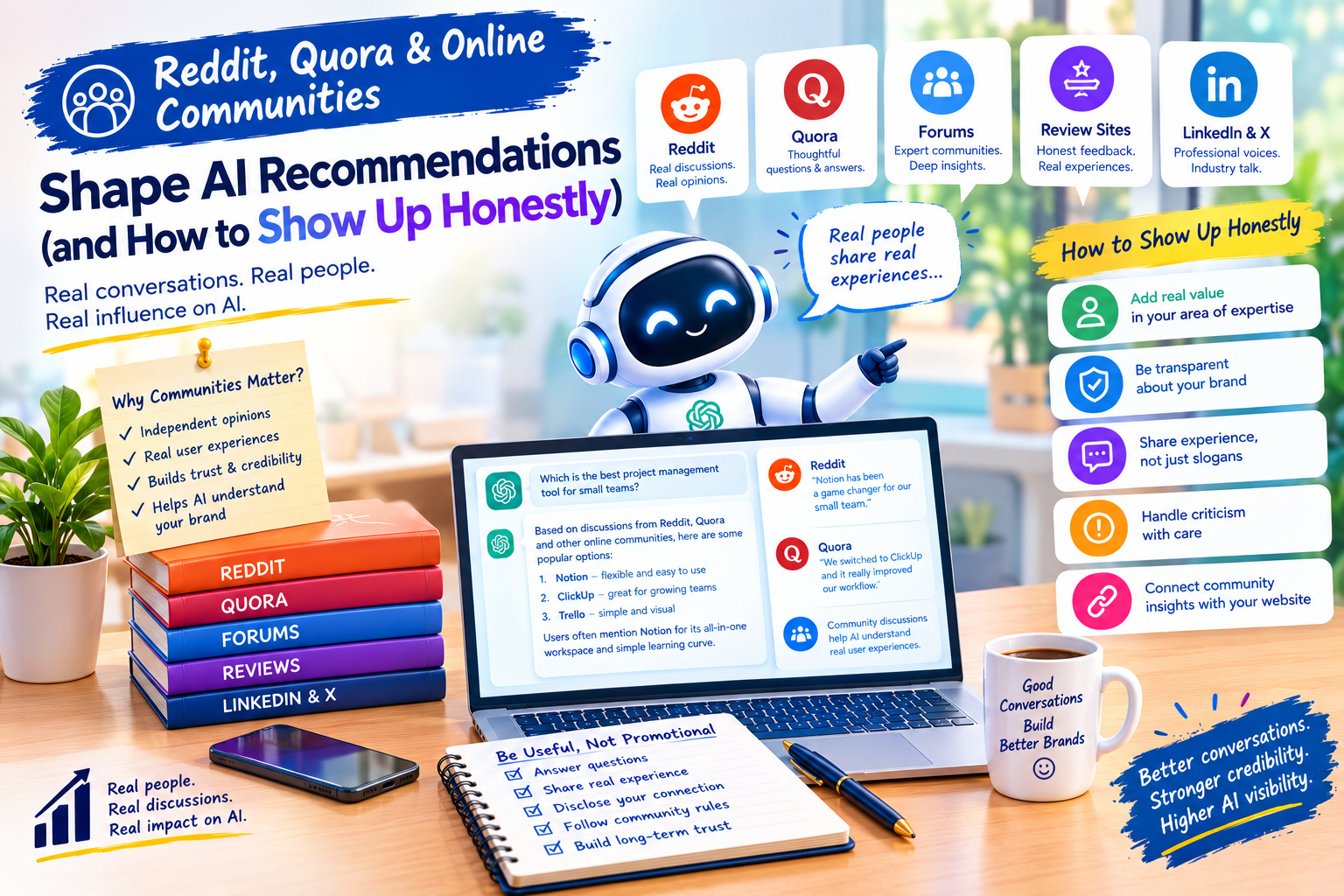
When people want an honest opinion, they rarely trust a brand’s own website. They search for what real users say: “Is this software worth it?”, “Which agency do people actually recommend?” Those conversations happen on Reddit, Quora, niche forums and review communities.
AI assistants have noticed. Community discussions often reflect how real people talk about a category, and AI tools can learn from and cite that kind of content. Here are the questions we hear most about communities and AI SEO.
Why do forums and community sites matter for AI visibility?
Because they carry something your website can’t: independent opinion. A company can call itself “the best” on its homepage, but a customer saying “I used this for six months and here’s what happened” is far more convincing.
AI tools look for patterns across many sources. When your brand is mentioned positively and consistently in real conversations, it strengthens the picture AI forms of you. When it’s never mentioned, or mentioned only with complaints, that shows up too.
Which platforms are worth paying attention to?
It depends on your audience, but common ones include:
- Reddit, for detailed, candid discussions across almost every niche.
- Quora, for question-and-answer content that mirrors how people ask AI.
- Industry forums and groups, for professional and technical communities.
- Review platforms, for structured feedback on products and services.
- LinkedIn and X discussions, for expert commentary in business topics.
You don’t need to be everywhere. Choose two or three places where your customers genuinely spend time.
Can I just post about my brand to get mentioned?
No, and this is the most important point in this article. Communities are quick to spot self-promotion, fake accounts and coordinated posting. Violating a platform’s rules can get you banned, damage your reputation and leave a negative trail that AI tools may pick up on.
The right approach is simple: participate honestly. Use your real identity or a clearly disclosed company account, follow each community’s rules, and focus on being useful first. Reputation built this way is slow, but it lasts. Sarkar SEO advises clients to avoid any tactic that depends on pretending to be someone else, because trust is the whole point.
What does honest participation look like in practice?
A few habits go a long way:
- Answer questions in your area of expertise with real detail, not a sales pitch.
- Disclose your connection when you mention your own brand.
- Share experience, not slogans. Explain what you’ve seen, what worked and what didn’t.
- Admit limits. Saying “this isn’t the right fit for everyone” builds credibility.
- Be consistent. A few helpful answers every week beat a sudden burst of activity.
Over time, people begin to recognize your name as a reliable voice. That recognition can lead to genuine mentions from others.
How can I encourage real customer conversations?
You can’t script what customers say, but you can make it easier for them to share honest experiences:
- Ask satisfied customers for detailed reviews on relevant platforms.
- Invite feedback after a project and respond to it publicly.
- Host Q&A sessions or AMAs where it’s allowed.
- Create content worth discussing, such as original research, helpful tools or clear explainers.
- Resolve complaints quickly and politely, since how you handle problems is visible too.
Never offer payment in exchange for positive reviews where platform rules forbid it. Authentic feedback, including the occasional critical comment, makes your reputation more believable.
What should I do about negative threads?
Don’t ignore them, and don’t argue. If a criticism is fair, respond calmly, acknowledge the issue and explain what you’re doing to fix it. If it’s inaccurate, correct it politely with facts and avoid defensiveness.
A thoughtful reply often helps more than the original complaint hurts, because future readers, and AI tools learning from those pages, see a business that listens. At Sarkar SEO, reputation monitoring is a regular part of how we protect a client’s AI visibility.
How do I connect community activity with my website?
Your community presence and your website should support each other:
- Publish detailed guides and FAQs on your site that answer the questions you see people asking in forums.
- Link to your content when it’s genuinely helpful and allowed by the community rules, not as spam.
- Keep your brand description consistent across your profiles and your website.
- Turn recurring community questions into new articles and FAQ entries.
This loop gives you a steady source of content ideas, and it makes sure your website offers the depth that quick forum answers can’t.
How do I measure whether this is working?
Keep it simple:
- Track brand mentions across the platforms you care about.
- Note the tone of those mentions: positive, neutral or negative.
- Run your list of customer questions in ChatGPT, Gemini and Perplexity each month.
- Check whether AI answers reference community discussions or describe your brand differently over time.
Look for trends over a few months. Community influence builds gradually, and a single day’s result tells you very little.
What mistakes should I avoid?
- Fake accounts or astroturfing. It risks bans and lasting reputation damage.
- Copy-pasting promotional replies across many threads.
- Ignoring community rules.
- Only showing up when you need something.
- Expecting quick wins. Trust takes time.
