




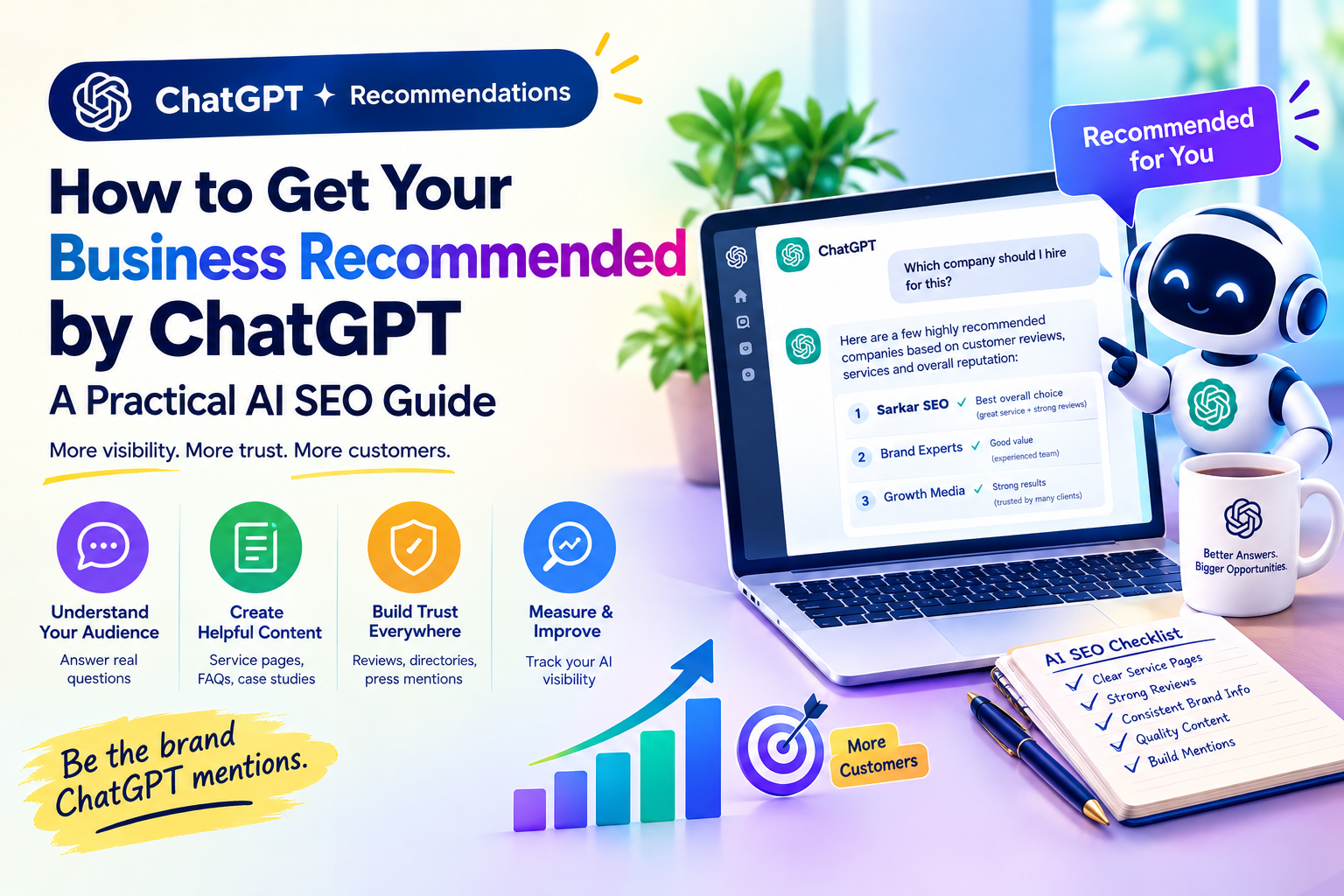
A customer opens ChatGPT and types, “Which company should I hire for this?” Within seconds, the AI names two or three businesses and explains why. Nobody scrolled through search results. Nobody compared ten tabs. The decision started right there in the chat.
If your business isn’t one of those names, you are missing a growing share of high-intent customers. The good news is that you can influence this. Here are the questions we hear most about AI SEO and recommendations.
Why does ChatGPT recommend some businesses and ignore others?
AI models recommend businesses they can clearly understand and confidently describe. That confidence comes from consistency. When your website, reviews, directory listings and press mentions all tell the same story about what you do, who you serve and where you operate, the AI has something solid to work with.
When the information is thin, outdated or contradictory, the AI plays it safe and names someone else. In other words, recommendations go to the brands that are easiest to explain.
What kind of questions do customers actually ask AI?
Not keywords. Full conversations. Compare these two:
- Old search: “dentist near me”
- AI prompt: “I need a dentist who is good with anxious kids and offers weekend appointments. Who would you suggest?”
The second prompt is long, specific and personal. To be recommended, your content must answer questions at that level of detail. Make a list of the real questions your customers ask on calls, in emails and on social media, then build pages around them. This is the heart of modern AI SEO: answering the question as the customer phrases it.
What content helps a business get recommended?
Four content types consistently pull their weight:
- Clear service pages. State what you offer, who it’s for, your location, your pricing approach and what makes you different.
- Comparison pages. Honest “Option A vs Option B” content helps AI explain when your service is the right fit.
- FAQ sections. Short, factual answers are easy for AI to quote.
- Proof pages. Case studies, testimonials and real results give the AI evidence to repeat.
Write in plain language. If a page could belong to any company in your industry, it won’t help you stand out.
Do reviews and third-party mentions really matter?
Yes, probably more than most owners expect. AI tools don’t rely only on what you say about yourself. They look at what others say about you. Review sites, industry directories, local listings, news features and community discussions all shape how your brand is described.
A simple routine works well: ask happy customers for detailed reviews, keep your profiles on major platforms accurate, and pursue features in credible publications. Detailed reviews that mention specific services and outcomes are far more useful than a bare “great service.”
Is optimizing for Gemini and Perplexity different from ChatGPT?
The basics are the same, but the habits differ slightly:
- ChatGPT tends to produce conversational recommendations, so clear brand descriptions and consistent mentions matter.
- Gemini is closely tied to Google’s ecosystem, so strong Google Business Profile details, schema and traditional SEO signals help.
- Perplexity shows its sources openly, so well-structured, citable pages and credible publications matter a lot.
Rather than building three strategies, build one strong foundation and then test how each platform responds. At Sarkar SEO, we run exactly this kind of cross-platform testing so clients can see where they appear and where they don’t.
How long does it take to see results?
Be skeptical of anyone who promises a date. AI visibility usually improves gradually as your content, mentions and reputation build up. Some changes, like fixing blocked crawlers or clarifying your service pages, can help relatively quickly. Brand-level trust takes longer. Think in terms of months, and measure progress with the same set of prompts each month.
What common myths should I ignore?
“Just stuff my page with AI keywords.” This doesn’t work. AI models read meaning, not keyword counts.
“I can pay to be recommended.” There is no paid placement inside ChatGPT’s answers. Be careful with anyone who claims otherwise.
“AI SEO replaces normal SEO.” It doesn’t. Technical health, quality content and a good reputation still sit underneath everything.
“One blog post will do it.” Visibility comes from a consistent body of useful work, not a single article.
What is the simplest way to start this week?
Pick one service and do these four things:
- Write down ten questions a buyer would ask before choosing you.
- Answer each one clearly on a dedicated page or FAQ section.
- Check that your business details match everywhere online.
- Ask three recent customers for detailed reviews.
Then test the same ten questions in ChatGPT, note what you see and repeat next month. Sarkar SEO helps businesses turn this routine into a full strategy, covering content, brand mentions and ongoing measurement, so you don’t have to figure it out alone.
